If you’re setting up large-scale distributed generation such as solar or wind, or developing energy infrastructure such as electric vehicle charge points, it will be important for you to understand available capacity on the network – both current and future – and also future loads. If you’re subdividing land and looking to add electricity and fibre services to your project, there are also a few things to consider.
All subdivisions are treated as complex new connections, with connection costs assessed individually based on the specific requirements of each project. With the exclusion of on- property installations, we will take ownership of the installation upon completion and be responsible for ongoing maintenance and repairs.
Steps to get you connected
1. Enquire & Discuss
Before applying for a new complex connection, take time to understand your options, the process, timelines and application costs with helpful information.
Where your application is complex (i.e. it is a large load and/or you have flexibility in your connection size or location), you may want a free, confidential pre-application meeting with our Connections Team – you can ask for one during the application process.
Complete your application online or engage your electrician, who will apply for your connection on your behalf.
This step covers:
Initial application for major projects,
A high-level application review within approximately 30 working days (we may request more information)
Feasibility studies (we will agree costs with you before any work commences)
Typically, complex applications require some level of design to be carried out before we can provide you with a quotation. We reserve the right to charge you for design services, and this will be discussed at the preapplication stage.
Some projects may need other steps, e.g. consent status, easement or Transpower conditions advised.
Capacity will be reserved once you reach a final application stage and is applicable to your connection type and size.
Our Key Account Managers will manage our internal processes, guide you along the way and contact you as needed.
3. Design & Approve
We work with your electrician to design the solution for your needs.
This step covers:
A preliminary service agreement/network approval, and customer terms acceptance to proceed for standard projects
An initial agreement/approval to proceed for complex projects, subject to more work
Detailed studies/ design (with costs), interim/ final application, network application approval and network quote/ customer acceptance for complex projects
Connection and works agreement
Payment, and
Final capacity prioritised.
An interim application for approval is usually within 90 working days but can vary according to:
The requirements of the electricity code and size of connection applied for
Further work is required to make a connection available, or
Further network design and construction work is required on Alpine Energy’s network to enable your connection
For complex applications such as larger commercial or industrial loads or Distributed Generation we may require detailed network studies.
Finally,
Once you’re able to proceed, we’ll issue you an installation control point (ICP) number. You can contact your retailer to arrange for metering by quoting this ICP number. We’ll also supply this ICP number to your retailer.
4. Deliver & Build
Our team will, build, test and liven any agreed new network assets and co-ordinate with service providers. In parallel, your approved contractor will complete the service connection works, which you will contract with them and pay for.
5. Connect & Complete
When the connection is ready, your approved contractor can progress connection work, including an authorised inspector and metering (with your retailer).
Complex connections may require specific commissioning steps and/or testing. Documentation may be required to finalise, e.g. as-built designs, easements, engineers’ sign-off, and certificate of compliance.
Our team or your service provider will inform you about these.
Building large-scale solar
There are a number of key factors to determine if investing in large-scale solar, such as installing solar panels on the roof of your business or warehouse, is right for your business. You may also be looking at setting up a large-scale solar farm.
For generation projects over 1MW, connecting to the network typically involves a range of technical studies, design reviews, approvals, agreements and commissioning activities. We’ve developed a Large-Scale Solar Connection Responsibilities Matrix to help developers understand the key stages of the connection process and the respective responsibilities of the applicant, Alpine Energy and Transpower.
This guide is intended as a high-level reference and should be read alongside project-specific requirements and the Electricity Industry Participation Code 2010 - Schedule 6.1 - Part 2.
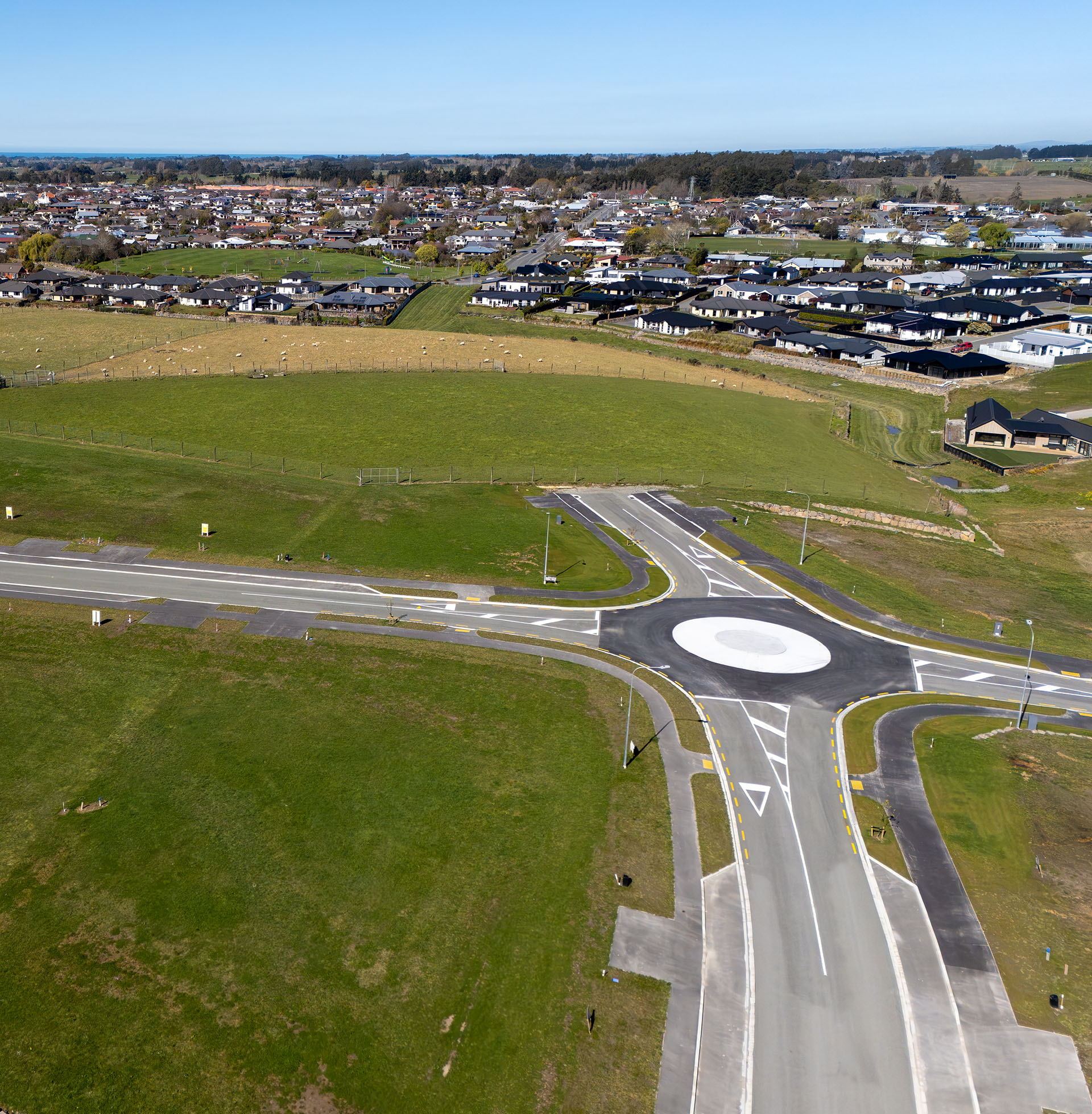
Planning to develop land or subdivide
We can help with guiding you through the process, advise on where you’ll need to liaise with local authorities for consenting requirements and provide details of relevant guides and standards you’ll need to follow to ensure our network remains safe and reliable for all our customers.
All subdivisions are treated as complex new connections, with connection costs assessed individually based on the specific requirements of each project. With the exclusion of on- property installations, we will take ownership of the installation upon completion and be responsible for ongoing maintenance and repairs.
We constantly monitor, maintain and adjust our network so it can deliver electricity safely and efficiently to you. By comparing the energy flows on the network with the rated capacity of our equipment, we can estimate the available network hosting capacity for a new load or a new generation.
Hosting capacity information is useful for new investors looking to locate energy-using businesses in our region, as well as existing customers whose needs have changed.