
Planting near power lines
The right tree in the right place can help create a beautiful and healthy environment without putting people, property or the electricity network at risk. The Electricity (Hazards from Trees) Regulations 2003 set out rules for managing trees and vegetation near power lines. These apply to both the tree owners and us as your lines company.
Before planting, think about how tall your tree is likely to grow and how close it will be to power lines when it reaches maturity.
Trees on your property are generally your responsibility, so choosing suitable species and planting them away from power lines can reduce the need for ongoing maintenance and help prevent power outages.
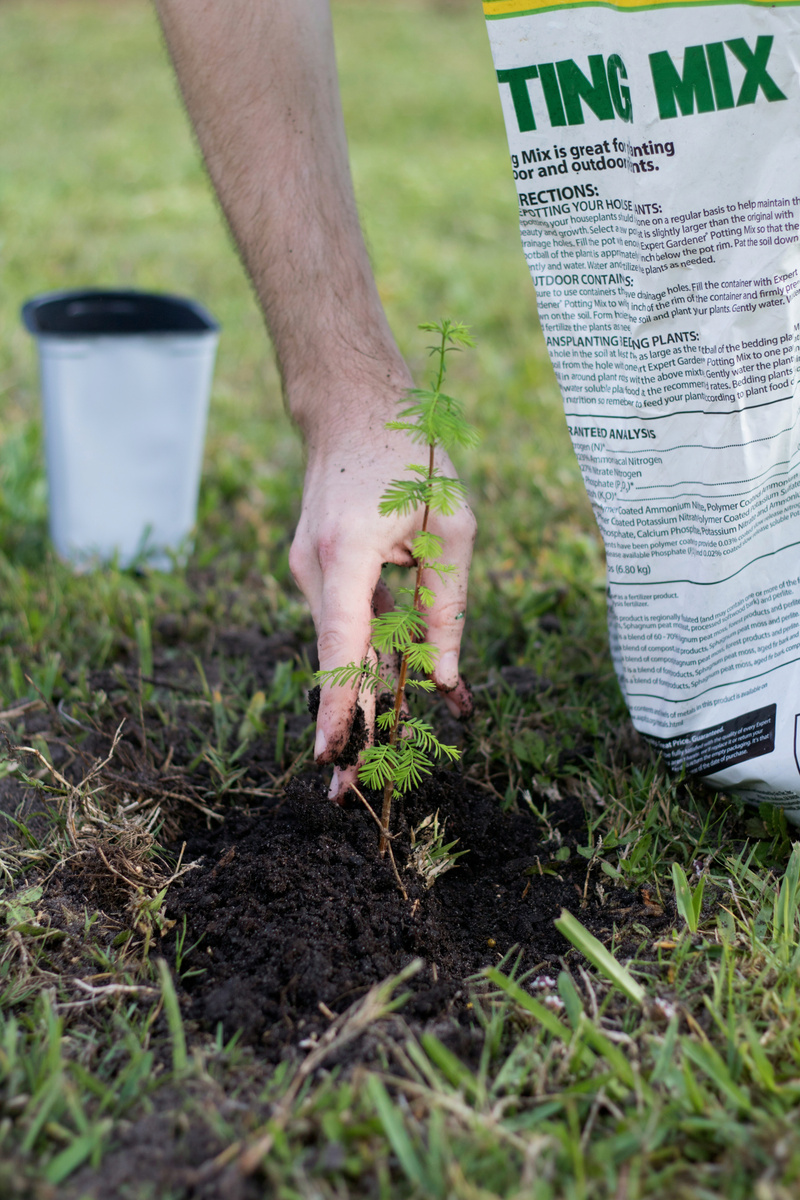
Choose the right tree for the right place
When choosing a tree or shrub, consider:
- its expected mature height
- how close it will be to power lines when fully grown
- how wide the canopy is likely to become
- how branches may grow towards or above power lines
- how the tree may respond to strong winds, snow or ice
- the location of underground electricity cables and other infrastructure
- how much ongoing trimming the tree is likely to require.
Choosing a tree that is naturally suited to the available space can reduce ongoing maintenance and help protect the electricity network.
Check out our planting guide for advice on which trees to plant
Low height planting zone
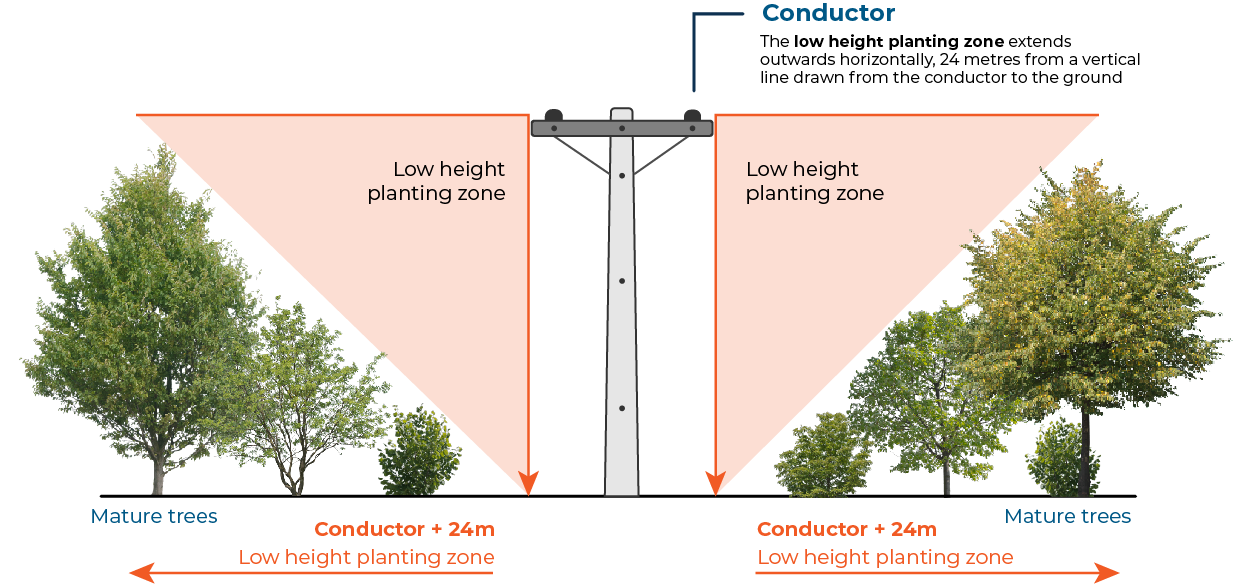
The Electricity (Hazards from Trees) Regulations 2003 introduce new restrictions on planting trees near power lines in certain areas. From 23 July 2027, the Low Height Planting Zone will apply to new tree planting in applicable areas.
The Low Height Planting Zone extends 24 metres horizontally from a power line. Within the Low Height Planting Zone, you must not plant a tree if you have reasonable grounds to believe that its mature height will be greater than its distance from the power line.
For example, if a tree is planted 10 metres horizontally from a power line, its expected mature height must not be greater than 10 metres.
These planting restrictions apply to applicable land outside urban areas and do not apply to:
- existing forest land
- urban areas
- shelterbelts
- land administered under the Conservation Act 1987.
The planting restriction does not apply to trees that grow naturally. However, if a self-sown tree within the low height planting zone later needs to be cut, trimmed or removed, the tree owner may be responsible for the cost.
If you're unsure whether your property is in an urban area, check your district plan or contact your local council.
What if I plant a tree that doesn't comply?
If a tree is planted in breach of the Low Height Planting Zone requirements, the tree owner may be responsible for:
- damage caused by the tree
- future trimming or removal costs
- managing the tree where it becomes a hazard.
A no-interest tree notice cannot be used to transfer responsibility for managing a tree that was planted in breach of the Low Height Planting Zone. The Low Height Planting Zone restriction itself is not an offence, but breaching it can affect who is responsible for future costs and the options available to the tree owner.
Know before you plant
Before planting near a power line:
- Identify where the power lines run.
- Check how close your proposed planting will be.
- Consider the tree's expected mature height and spread.
- Check whether the Low Height Planting Zone applies.
- Choose a species that can grow safely in the available space.
- Contact Alpine Energy if you're unsure.